Brekoc/Brekovac

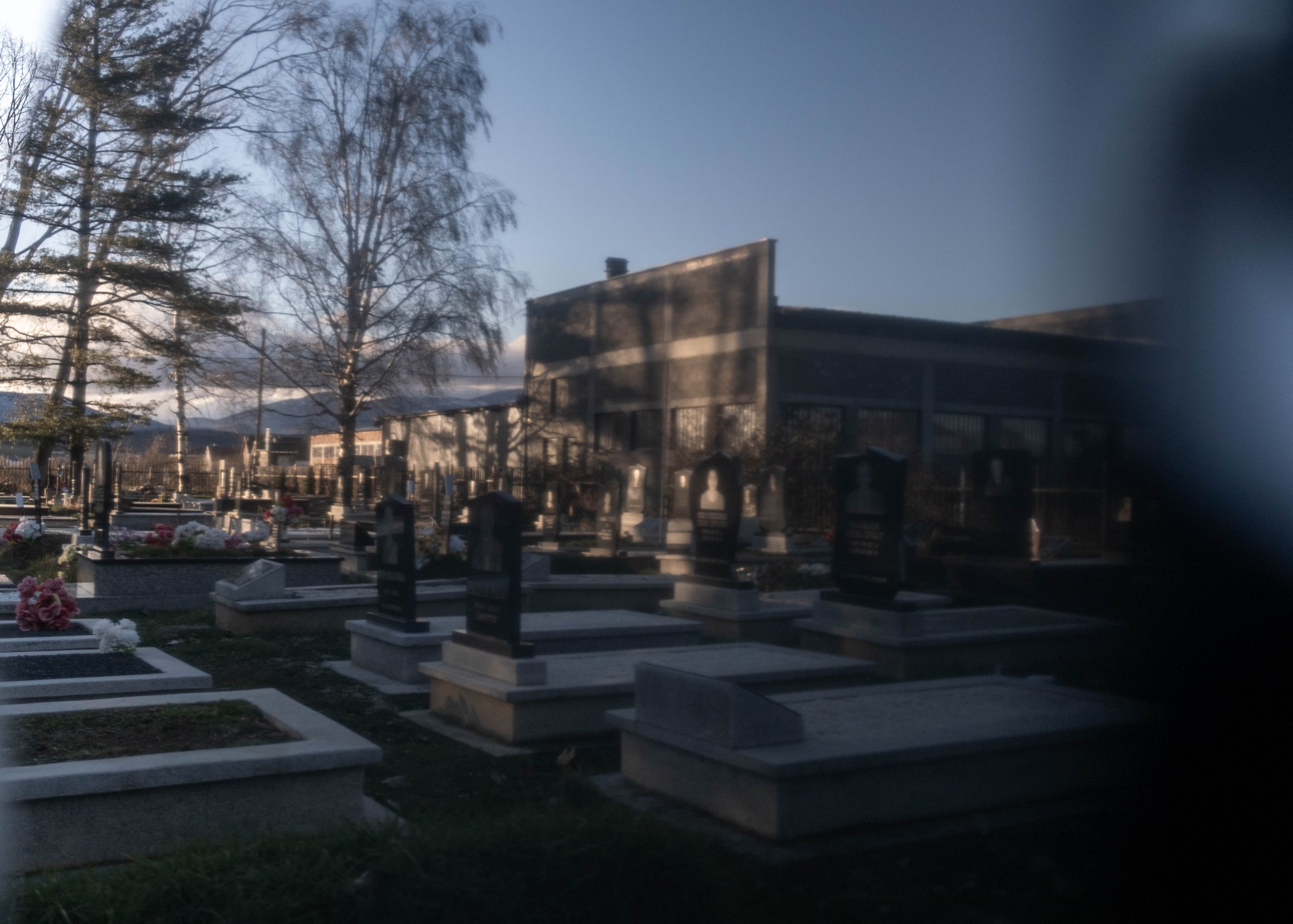
The Brekoc/Brekovac gravesite, where 121 bodies were found in 1999 after the war ended, is located within the city cemetery in Gjakova/Djakovica and is considered to be one of the largest wartime gravesites in Kosovo.

Gjakova/Djakovica, some 90 kilometres south-west of Pristina, suffered a lot during the war – the city was almost razed to the ground, while the ethnic Albanian population was either killed or expelled. The city is located close to the Albanian border, which made it strategically important for both the Kosovo Liberation Army and Yugoslav forces. 

The violence in Djakovica was well organised, according to campaign group Human Rights Watch. Although some killings took place almost every day, the large-scale violence and destruction occurred in distinct phases and appeared to be coordinated by Serbian security forces. Human Rights Watch’s report said that prominent residents of the city, such as lawyers, doctors and political activists, appeared to have been targeted for murder.

Today the location remains unmarked and, as it is part of the city cemetery, after the war the city authorities used the remaining land for other graves unrelated to the war.

Those who were buried at Brekoc/Brekovac site were killed during an operation by Serbian forces called ‘Reka’ (‘River’) at the end of April and beginning of May 1999. It involved at least ten Serbian police and Yugoslav Army units that killed and expelled thousands of people in the area around Gjakova/Djakovica and the villages of Meja and Korenica.

According to verdicts handed down by the International Criminal Tribunal for the Former Yugoslavia, ICTY in cases against Serbian military and police officials, during the attacks on Meja and Korenica, the Yugoslav Army, Serbian police and paramilitary units killed at least 377 civilians, of whom 36 were under 18 years old.

Thousands were expelled to neighbouring Albania, and 13 people are still listed as missing.

The attack on villages Meja and Korenica came a month after the start of the NATO bombing of Yugoslavia, which was aimed at ending President Slobodan Milosevic’s military campaign in Kosovo. As NATO’s air strikes intensified, so did Serbian army and police operations, and the killings and expulsions of Kosovo Albanians.

Yugoslav forces entered Meja and Korenica with tanks, forced the ethnic Albanian civilians from their houses, took their money and separated men from women.

Most of the men were killed, while the women and children were sent to Albania.

Human Rights Watch visited Meja on June 15 1999, after NATO entered Kosovo, and saw the decomposing remains of several men, burned documents and personal possessions that apparently belonged to the men who had been killed there, as well as spent bullet casings.

Human Rights Watch also found the decomposed remains of several men. The bodies were on the edge of a field next to the road that runs through Meja. One intact body and the top half of another were located on the side of a ravine adjacent to the field. Another two bodies were found a few metres away, and the bottom half of another body in a field near the ravine. All of the bodies were in an advanced state of decay. The bones of some of the bodies were broken, and they all appeared to be headless. Pieces of a skull were found next to one of the bodies.

Closer to the road, the Human Rights Watch saw three large piles of straw and cow manure, which a villager claimed covered many more bodies. The villager also stated that the bodies of most of the men killed in the massacre had been collected by municipal service workers, which was later confirmed by the ICTY. 

Some of the bodies of the people killed in this area were initially buried at the Brekoc/Brekovac cemetery, while some were transported to Belgrade as part of a cover-up operation and buried at a police compound in Batajnica near Belgrade. 

A protected witness told the ICTY trial of former Serbian President Milan Milutinovic that he had worked as an excavator operator and took part in the excavation of bodies in three different locations in the Gjakova/Djakovica area – Brekoc/Brekovac, the Bistrazhin/Bistrazin bridge and the village of Guska, as well as the forest nearby.

The ICTY convicted six senior Serbian officials of being responsible for the killings.

Analysis of the ICTY evidence by BIRN revealed that more than 30 people were involved in or knew about the killings – one of the biggest massacres of the Kosovo war – and did not do anything to stop it or act to punish those who committed crimes.

Despite the evidence that exists, none of them have ever been prosecuted for the massacres in Meja and Korenica. All of them are still free and live in Serbia, Montenegro or Slovenia.
Qirez/Cirez

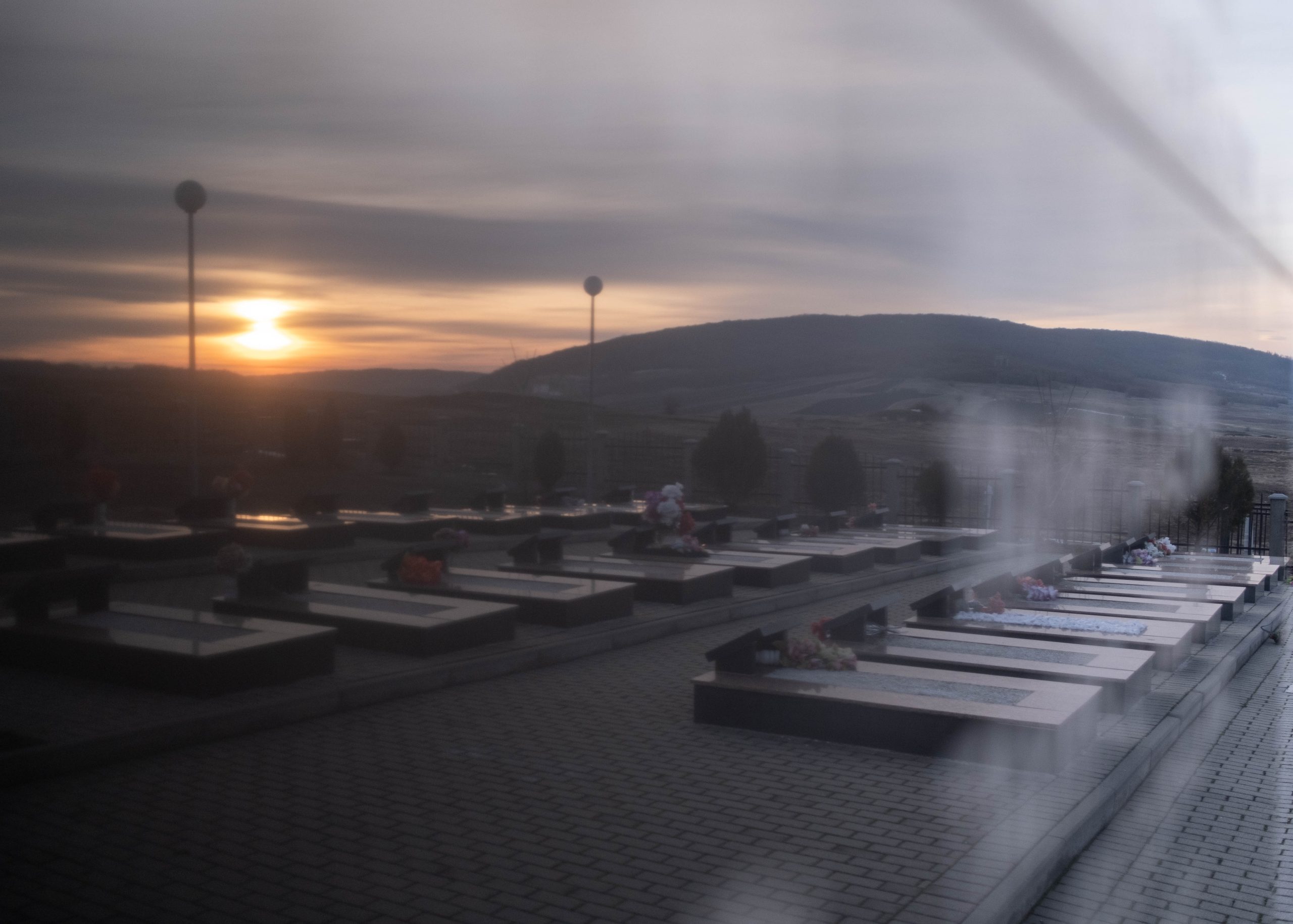
On a hilltop between the Kosovo villages of Qirez/Cirez and Likoshan/Likosane, a memorial has been erected to commemorate the ethnic Albanians who were killed in March 1999 and found after the war in a number of mass graves in the surrounding area. The remains of 96 victims have been identified.

The surrounding region, flanked by the Drenica mountains to the west, consists of the municipalities of Gllogoc/Glogovac and Skenderaj/Srbica. Prior to 1998 when the conflict in Kosovo started, both municipalities had almost entirely ethnic Albanian populations. The villages that surround the two towns are the birthplace of the Kosovo Liberation Army, which began armed operations in Drenica in 1996. They are also the scene of some of the worst abuses committed against civilians in 1999, as documented by a number of human rights organisations and later confirmed at the International Criminal Tribunal for the Former Yugoslavia, ICTY in its trial of six Yugoslav and Serbian state, army and police officials.  

According to the ICTY indictment, beginning on or about March 25, 1999, Yugoslav and Serbian forces shelled and burned the villages of Vojnike/Vocnjak, Lecine/Leocina, Klladernice/Kladernica, Turicec/Turicevac and Izbice/Izbica. Many of the houses, shops and mosques were destroyed, including the mosque in the centre of the village of Cirez/Qirez.

In groups of two or three, soldiers went from house to house in the villages, forcing their way in and, threatening residents with death, demanding money and valuables, according to the Belgrade-based Humanitarian Law Centre NGO.

Some women and children were taken away by members of Yugoslav forces and held in a barn in Cirez/Qirez. The women were subjected to sexual assault and their money and property were stolen.

The soldiers threatened to kill them all, together with their children, took away their identity papers, money and jewellery, and then two soldiers led them to a barn and locked them in. According to testimonies gathered by the Humanitarian Law Centre, soldiers several times took girls and younger women, some of whom were in advanced stages of pregnancy (between four and eight months), out of the barn and forced each of them to have intercourse and also exploited and abused them sexually in other ways.

The ICTY confirmed in its verdict that at least eight of the women were killed after being sexually assaulted, and their bodies were thrown into three wells in the village of Qirez/Cirez.

Yugoslav and Serbian forces rounded up around 4,500 ethnic Albanians from the surrounding villages, took their money and documents, and separated the men from the women. The women were mostly expelled to Albania, while large groups of men were killed. Some of the bodies were found later in the mass graves in the village, others in mass graves in Serbia. 

The killings in Qirez/Cirez formed part of the trial in The Hague of the former Yugoslav government official Nikola Sainovic and four other political and military leaders – Dragoljub Ojdanovic, Nebojsa Pavkovic, Vladimir Lazarevic and Sreten Lukic – who were found guilty by the ICTY.

The Humanitarian Law Centre also filed a criminal complaint against the former head of Serbian Army, Ljubisa Dikovic, who, during the Kosovo war, was commander of the 37th Motorised Brigade of the Yugoslav army, alleging that his units committed crimes in villages in the Drenica area. Dikovic has insisted he is not guilty. 

Piljak Pit

The Piljak mass grave was discovered and exhumed in 2001, at Mount Malusa, 29 kilometres from the town of Foca in eastern Bosnia and Herzegovina. Amor Masovic, the head of the country’s Missing Persons Commission, received an anonymous letter informing him that the bodies of 80 Bosniaks from Foca were buried there. 

The letter was handwritten and said: “Mr. Masovic, I want to inform you that in 1992, 80 Muslim camp inmates were thrown in the Piljak Pit.” It said they had been taken from the KP Dom detention camp. It was signed “a Serb from Foca”.

The remains of 62 people were found at the bottom of the pit, all of them civilians. Pieces of rope found at the site showed that they had been tied up before the killings. The empty ammunition shells found around the pit indicated that the victims were brought there alive and executed at the site.

The pit is 33 metres deep and located on a slope which has no path leading to it. Documents that were discovered during the exhumation confirmed that the victims were last seen at the KP Dom detention camp in Foca.

The location of the mass grave is unmarked and not easily approachable, hidden deep among the forests of Mount Malusa. 

In April 1992, Bosnian Serb forces occupied Foca and surrounding areas populated by Bosniaks. The takeover was followed by a widespread campaign of destruction, murder and terror against non-Serbs.

The Bosnian Serbs established the Crisis Committee, which set up a network of detention centres, where non-Serb civilians were detained, tortured, raped and were either expelled, killed or went missing. The businesses and properties of non-Serbs were expropriated or destroyed. 

Bosniaks and other non-Serb men were unlawfully detained from April 1992 at the KP Dom detention facility where they were tortured, beaten and otherwise mistreated. One man who was detained at KP Dom for more than six months told campaign group Human Rights Watch: “During April and May [1992], they brought around 600 men to KP Dom. Around 400 of them were taken away and ‘disappeared’.” Men were also taken away at night and tortured by the guards and military police, he added.

Milorad Krnojelac, who was the commander of KP Dom, was sentenced to 15 years in prison for torture, murder, persecution and cruel treatment by the International Criminal Tribunal for Former Yugoslavia (ICTY). He was granted early release in 2009.

Three former interrogators and police guards identified by witnesses, Miodrag Koprivica, Miro Burilo and Slavko Koroman, were never indicted and continued to work as police officers in Foca. 

Uborak and Sutina

In the summer of 1992, the bodies of 114 Bosniak and Bosnian Croat civilians were found in two mass graves at the Uborak municipal landfill and the Sutina cemetery in Mostar.

In June 1992, the first mass grave was discovered at the Sutina cemetery, containing the remains of 26 civilians from Mostar. Two months later, in August 1992, another mass grave was uncovered at the Uborak municipal landfill, some five kilometres from Sutina. It contained the remains of 88 war civilians. Most of them had been shot in the head with automatic weapons.

The exhumations were carried out as the war continued. Police inspector Drazen Pazin, who was involved in the process of exhumation at the Uborak landfill, said there were difficulties digging up the bodies because of constant shelling from positions held by the Yugoslav People’s Army (JNA).

Earlier in the summer of 1992, Bosniak and Croats were taken from various villages north of Mostar, and from the Carina and Zalik neighbourhoods, by Serb fighters. The captives were detained in locker rooms at the FK Lokomotiva Mostar football stadium in Vrapcici, and taken for questioning in buildings at the Sutina cemetrey, where they were also held in detention. 

All 114 victims buried at Uborak and Sutina were killed on June 13, 1992. The perpetrators were members of the JNA, reservists and members of paramilitary groups, assisted by local Serbs, according to trial witnesses. 

There is now a memorial plaque honouring the victims at the Uborak landfill. 

No one has yet been convicted of the killings of the Bosniaks and Croats who were buried at Uborak and Sutina.

At the time of the crime, the JNA units were commanded by general Momcilo Perisic. Although he was prosecuted in The Hague, Uborak was not included in the indictment. The Hague Tribunal established in its verdict in the trial of Serbian Radical Party leader Vojislav Seselj that in April and June 1992, members of the Serb-led Territorial Defence, paramilitary units and fighters known as Seseljevci (‘Seselj’s Men’) tortured and mistreated prisoners at the Uborak landfill, the Sutina cemetery and the FK Lokomotiva Mostar stadium.

Laniste 2

Laniste 2 is a primary mass grave at Mount Grmec, 15 kilometres from the town of Kljuc in north-western Bosnia and Herzegovina. The mass grave was discovered by the police in October 1995 immediately after the end of the occupation of the area by the Bosnian Serb Army and Serbian paramilitary units. The exhumation process started in October 1996 and uncovered the remains of 77 people, of whom 70 have been identified. 

The grave was located on an overgrown meadow, surrounded by woods and intersected by several paths. During the exhumation, ammunition, bullets, fuel canisters and steel cables over eight metres long were discovered. Police and the exhumation team also discovered an identity card with the name Hasan Zukic. The location of the mass grave remains unmarked. 

On May 31, 1992, the Bosnian Serb Army told men from the village of Velagici in the Kljuc municipality to go to the village school to get registration cards from the new Bosnian Serb municipality administration. The men were taken captive at the school and the next day, at least 78 men were lined up and shot in front of the school. The bodies were then taken for burial in the Laniste 2 mass grave. “Two trucks and a digger came. They loaded the bodies and drove them towards Laniste,” said Marinko Miljevic, a Bosnian Serb military policeman.

Miljevic was charged by the Bosnian prosecution with crimes against humanity alongside Ilija Krcmar, Bosko Uncanin, Svetislav Racic, Zeljko Bajic, Dragan Despot and two men with the same name, Nikola Cuk. The case against Krcmar, Racic, Bajic and the two men called Cuk was subsequently transferred to the Serbian judiciary.

Former Bosnian Serb Army soldiers Marko Adamovic and Bosko Lukic were sentenced to 22 and 14 years in prison respectively for their roles in the expulsions and killings of Bosniaks in Kljuc in 1992. They were found guilty of involvement in the attack on the village of Velagici in early June 1992, after which men of combat age were locked up in the nearby school, and at least 78 of them executed. Wartime Bosnian Serb military chief Ratko Mladic was also convicted of crimes in the Kljuc area, including the crimes in Velagici. 

There is now a village cemetery at the execution site with 121 markers for the Velagici dead, including those found in the Laniste 2 mass grave. 

Sasina

Sasina is a primary mass grave located eight kilometres from the town of Sanski Most in north-west Bosnia and Herzegovina. The exhumation took place from July 18 to 24, 1996 led by the Sanski Most Court and the State Commission for Exchange and Missing Persons. Sixty-five bodies were exhumed.

The gravesite is located next to the village road, near a Catholic church, surrounded by bushes and trees. 

According to witness statements, the victims found in the mass grave had been held hostage in Sanski Most by Serb paramilitary units and used for forced labour by the Bosnian Serb Army. On the night of September 20, 1995, the paramilitaries took the men with a bus, a truck and several cars to the Sasina site, then executed them. The victims were Bosniaks and Bosnian Croat civilians. The youngest victim was Besim Talic, who was 16 years old. 

The gravesite is marked with a memorial plaque that includes all the names of the victims.

In the first-instance verdict in the trial of former Serbian State Security Service chiefs Jovica Stanisic and Franko Simatovic, the Hague Tribunal concluded that on or about September 21, 1995, members of the Serbian Volunteer Guard paramilitary unit led by Zeljko Raznatovic, alias Arkan, detained a group of non-Serb civilians from Sanski Most and transferred them to Sasina, where they shot and killed more than 60 of them.

Arkan was also charged by Hague Tribunal prosecutors with the murder of 65 civilians from Sanski Most but he was killed in Belgrade in 2000 before standing trial. Members of his paramilitary unit were never prosecuted for the Sasina killings. So far, only one of his fighters, Boban Arsic, has been convicted. He was found guilty in absentia by a Croatian court of a separate war crime in Croatia in 1992.

Redak 1

Redak 1 is a primary mass grave located in the Ljubija iron mine complex, 18 kilometres from the city of Prijedor. It is on a secluded hillside, above a road, surrounded by woods. Seventy-four bodies were exhumed from the grave. Before the war, the gravesites were open pits inside the mine, but in 1992 they were filled with soil, according to witnesses. 

In late July 1992, about 120 men from the Miska Glava area, among whom were 15 minors, were first taken to the Miska Glava cultural centre, where a witness said they were assaulted, then to the nearby stadium, where they were tortured and abused for three days. While in detention, some ten to 15 prisoners were killed, while the rest were taken to Ljubija and shot. Only a few managed to survive.

Prosecution witness Nermin Karagic told Bosnian Serb military chief Ratko Mladic’s trial at the Hague Tribunal that he was 17 years old at the time and survived because a major eventually stopped the shootings, although his father was killed. “We were then ordered to carry the dead bodies and load them onto a bus,” Karagic said. He managed to escape by jumping off the bus.

The victims’ remains were found and exhumed from mass graves at the Redak 1 and Redak 2 sites, while ten more bodies were found at the Hozic Kamen site near the town of Bosanski Novi in 2016.

The Redak 1 mass grave site remains neglected and unmarked inside the Ljubija iron mine complex. The Redak 1 and Redak 2 sites, as well as the Jakarina Kosa and Tomasica sites, all located at the Ljubija mine, were used to hide the bodies of non-Serbs from the Prijedor and Sanski Most areas.

Three indictments have been raised in Bosnia but no one has yet been convicted.

Nine former members of the Bosnian Serb Army, the police and the local Bosnian Serb crisis staff, which arranged for Bosniaks to leave Serb-dominated municipalities, were indicted in 2017 for taking part in the unlawful detention of around 120 men in the Miska Glava area. The indictees were Slobodan Taranjac, Milodrag Glusac, Ranko Babic, Ranko Dosenovic, Marinko Prastalo, Rade Zekanovic, Zdravko Panic, Trivo and Milan Vukic.

In 2018, the Bosnian state court also confirmed the indictment of Milorad Obradovic and Slobodan Knezevic for taking part in the persecution of Bosniak civilians in late July 1992 as members of the reservist police force and military police in Ljubija near Prijedor.

In February 2022, two other suspects, Dane Bajic and Miodrag Knezevic were charged with crimes against humanity against Bosniaks and Croats in Prijedor in 1992, including the crimes in Miska Glava. Neither man appeared for a court hearing.

Prijedor is the area with the largest number of convicted war criminals in Bosnia and Herzegovina. A total of 37 Bosnian Serbs have been found guilty of committing crimes in the area and have been sentenced to a total of 617 years in prison. The International Criminal Tribunal for the Former Yugoslavia gave Milomir Stakic, wartime president of the Serb-controlled Prijedor municipality Crisis Staff, the highest sentence for crimes in Prijedor – 40 years in prison.

Bezdan Pit

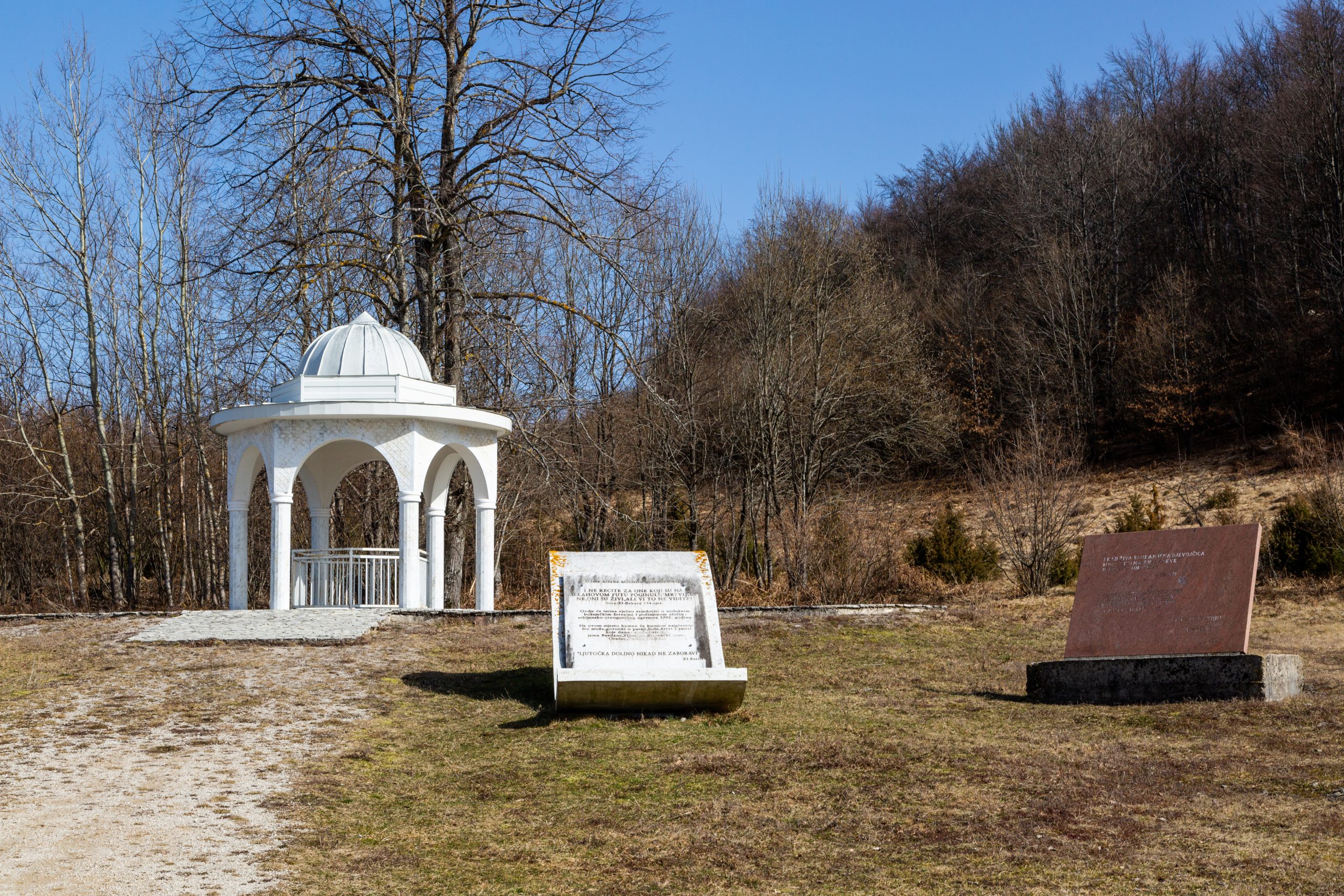
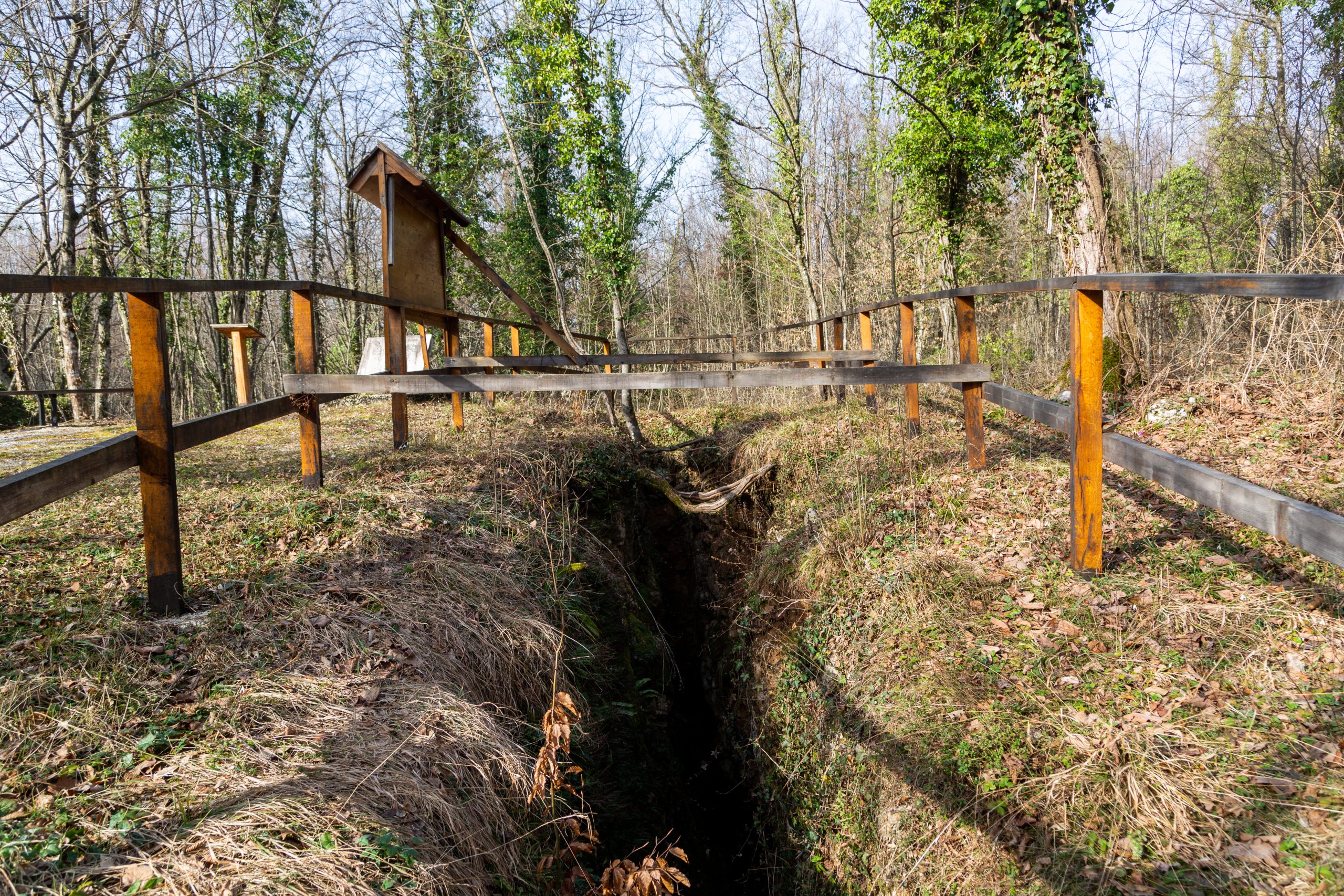
Bezdan Pit is a primary mass grave located on Mount Hrgar, south-east of the city of Bihac in north-west Bosnia and Herzegovina. The site is a natural vertical cave, two to three metres wide and 85 metres deep.

The mass grave was discovered after Ermin Lipovic, a criminal inspector for the Bihac police and an amateur climber and caver, descended into Bezdan pit with a photo and video camera in August 1997. He photographed and videotaped both the descent into the cave shaft and features of the cave floor. It was clear from both the photographs and the video footage that there were numerous human skeletal remains and remnants of clothing on the cave floor.

In September and October 1997, among the layers of garbage in the pit, the remains of 83 bodies were discovered. Sixty-five of them have been identified. The process of exhumation was halted several times due to the discovery of unexploded devices under the garbage and the bodies. All the victims were male and between 14 and 65 years of age. The most common cause of death was multiple gunshots. 

The victims were Bosniaks from Ljutocka Valley who were held at the IMT Tractor Service detention centre in the village of Ripac in July 1992 by the Bosnian Serb Army. According to witness statements, the murders were carried out by the 15th Light Infantry Brigade, members of military police platoons and local militia fighters. The victims were taken there in groups, executed and thrown into the pit.

The site is now marked with a plaque commemorating the victims who were killed in the summer of 1992, while the pit has been partially closed with a memorial monument.

Zeljko Stanarevic, a former military police officer with the 15th Light Infantry Brigade of the Bosnian Serb Army, was jailed for 13 years by the Bosnian state court for crimes committed in the Bihac area. The court found him guilty of participating in the murders of at least ten Bosniak civilians near the village of Hrgar. According to the verdict, Stanarevic and six other Bosnian Serb Army soldiers went the tractor workshop in Ripac where the civilians had been detained between June 24 and the first half of July 1992. 

At least ten of the civilians were then singled out, tied up and transported by truck to Hrgar and killed.

Another former Bosnian Serb Army soldier, Sasa Curguz, was also convicted in Bosnia and Herzegovina of involvement in the crime at Mount Hrgar and sentenced to 14 years in prison. Curguz was found guilty of participating in the murders of at least 11 prisoners from the village of Ripac and of inhumanely treating Bosniak detainees. According to the verdict, Curguz and six other Bosnian Serb soldiers arrived at the IMT Tractor Service in Ripac, where at least 55 captured Bosniak men were being held. The prisoners were put on a truck and transported to the edge of the Bezdan pit. One soldier immediately killed at least three prisoners, then two others threw the bodies into the pit, on the instructions of Curguz, who also personally killed several prisoners.

Former Bosnian Serb Army soldier Dragan Dopudja went on trial in Belgrade in 2021 for allegedly killing at least four prisoners near the village of Hrgar, whose remains were later found in the Bezdan pit.

In 2020, Interpol issued a ‘red notice’ calling for the arrest of Gojko Borjan, who is also suspected of committing war crimes at Mount Hrgar.

The case against Nenad Bubalo, a former Bosnian Serb Army military policeman accused of participating in the murders of at least five civilians at Mount Hrgar whose bodies were thrown into the Bezdan Pit, was closed in 2021 after he died.


Tihotina Pit

The Tihotina Pit is a primary mass grave located above the village of Pritoka, eight kilometres from the city of Bihac in north-west Bosnia and Herzegovina. It was the second mass grave to be found in the Bihac area containing the remains of Bosniak and Bosnian Croat civilians from the Ljutocka Valley. 

The mass grave was discovered in 2002 by the local police and the Missing Persons Institute. The pit was a former coal mine and is over 100 metres deep. The remains of 53 people aged 17 to 55 were found there. 

The victims were former prisoners from the Ripac and Racic wartime detention camps, as well as women and elderly people from the village of Ripac. 

The location is now marked with a memorial plaque commemorating the 53 civilians who were killed.

According to court verdicts, around 5,000 residents of the villages of Kulen-Vakuf, Orasac, Cukovo, Klisa and Ripac were expelled from their homes. Around 100 men were taken to detention camps in Ripac and Racic and then killed.

Bosnian Serb ex-fighter Zoran Tadic reached a plea agreement with the cantonal prosecution in Bihac, admitting that he was involved in the killing of 18 civilians, mostly women, elderly people and one teenage girl, in the village of Orasac near Bihac in 1992. After the killings, members of Bosnian Serb forces piled up the bodies and set them on fire.

After pleading guilty in 2012 in return for a sentence of 12 years, Tadic helped the police and prosecutors to find the bodies of the murdered civilians at the Tihotina Pit, which is near Orasac.

Four other Bosnian Serb ex-fighters also admitted guilt. The Bihac Cantonal Court sentenced Jovica Tadic to 12 years’ imprisonment, Zoran Berga and Zeljko Babic to 11 years and Goran Mihajlovic to ten-and-a-half years.

In 2014, former Bosnian Serb serviceman Djuro Tadic was jailed for 10 years at Belgrade Special Court. Two men who were also charged in the case, Gojko Djuric and Slobodan Djuric, died before the verdict, while another man alleged to have taken part in the killings, Cvetko Tadic, went on the run.

Lisac Pit

Lisac Pit is a primary mass grave located in the village of Donji Dubovik in the Bosanska Krupa municipality, around 50 kilometres from the city of Prijedor. It is a natural pit, located in a wooded area, where the remains of 54 people were exhumed in 2000, among them two women.

A witness at the trial of Milomir Stakic, the head of the municipal assembly and the local Serb-run Crisis Committee in the Prijedor municipality during wartime, “at the end of July 1992, 44 people were taken out of the Omarska camp and put on a bus. They were told that they were going to Bosanska Krupa for [prisoner] exchange. They were not seen again.”

The mass grave is located in the woods. It is unmarked and neglected, and is not easily identifiable or approachable.

In 2022, the Bosnian state court handed down a first-instance verdict sentencing Dusan Culibrk to 20 years in prison for participating in the murders of 51 civilians in Bosanska Krupa in 1992.

Culibrk, who was a reservist policeman in Bosanska Krupa, was found guilty of taking part in the abduction and murder of 44 Bosniak and Croat prisoners from the Omarska detention camp, among them were women, who were brought by minibus to Donji Dubovik, tied up with wire and shot dead near the Lisac Pit in July 1992. He was also found guilty of participating in the murders of seven other Bosniak civilians near the Lisac Pit in August 1992.

Another suspect, Milorad Kotur, who was charged alongside Culibrk, is being sought for arrest.

The International Criminal Tribunal for the Former Yugoslavia sentenced Milomir Stakic to 40 years in prison for crimes of extermination, murder and persecution in the Prijedor area. The crimes listed in the indictment included the killing of people whose bodies were found in the Lisac Pit. Miroslav Kvocka, Dragoljub Prcac, Mladjo Radic, Zoran Zigic and Milojica Kos were also convicted by the ICTY of crimes related to the killing of people whose bodies were found in the Lisac Pit.