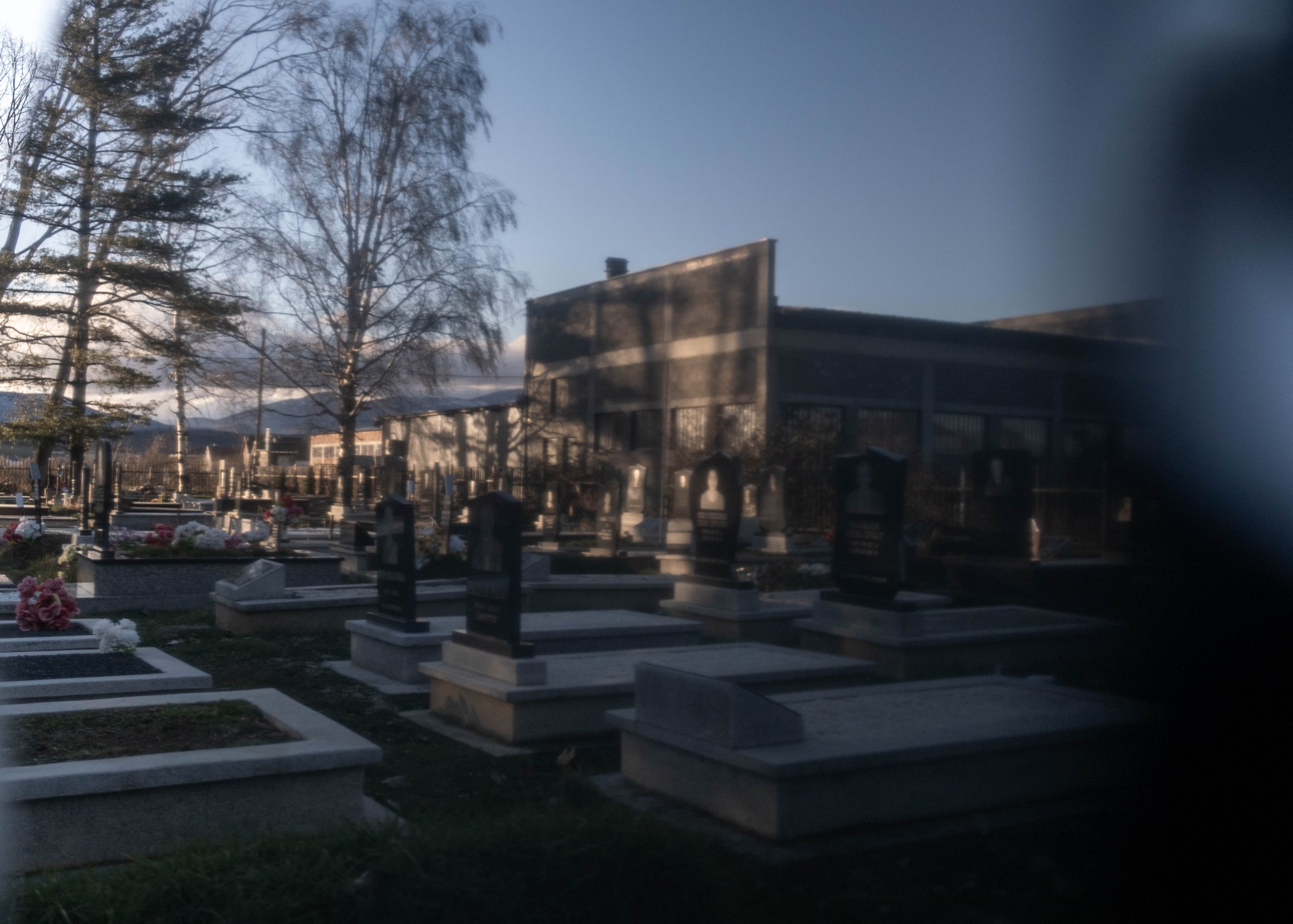
Prizren

The mass grave at the main cemetery in Prizren was discovered by international forensics experts working for the United Nations in 1999, following the withdrawal of Serbian forces from Kosovo. The grave contained bodies of civilians killed in the Prizren municipality. 

The Prizren municipality, located in Kosovo’s south-western corner, close to the border with Albania, had a relatively mixed ethnic population before the beginning of the war in 1999. 

Many crimes were committed in the municipality during the NATO bombing of Yugoslavia, when Yugoslav President Slobodan Milosevic stepped up his repression of Kosovo Albanians. 

The Tusus neighbourhood in the city of Prizren was a specific focus for crimes during that period. According to campaign group Human Rights Watch, Serbian forces killed some 27 to 34 people and burned over 100 homes in an attack on the Tusus neighbourhood on May 26, 1999.

According to witnesses, the perpetrators of the attack, the most violent incident in Prizren during the conflict, were a mixture of special police forces and paramilitaries. 

Following the killings and destruction, a truck arrived to pick up the bodies of the dead. The group of people looking after the truck were said to include an ethnic Albanian driver, four Serbian civil servants, and four Roma who were charged with retrieving the bodies, according to a Human Rights Watch report.

“Their truck was full of dead bodies,” said one witness. “It was open in the back and you could see them. They were going house to house looking for bodies. They threw them in the back of the truck like sacks.”

But with the exception of the Tusus neighbourhood, the ethnic cleansing in the city of Prizren was carried out with a lesser degree of violence and fewer vicious attacks than in many other parts of Kosovo. The surrounding villages were not spared, however, and there were organised expulsions and killings of ethnic Albanians. 

Those killed in the city of Prizren and the surrounding areas were buried in a number of smaller mass graves or at the central cemetery in unmarked graves. 

The Yugoslav Army’s Third Army, which was responsible for Kosovo, had a barracks in Prizren, and witnesses have claimed that the army was involved in a lot of operations in the municipality, coordinating its actions with the police. 

The army’s 549th Motorised Brigade, commanded by Bozidar Delic, was based in Prizren. Delic was investigated by the Serbian prosecution for war crimes, but never indicted. After the war, Delic was active in Serbian politics and served as a member of parliament before his death in 2022. 


Studime e Epërme/ Gornja Sudimlja

The mass grave is located in the municipality of Vushtrri/Vucitrn, in the north of the central part of Kosovo, which became a target for an offensive by Serbian forces from the beginning in March 1999 of the NATO air campaign aimed at ending the killings and expulsions of Kosovo Albanians by the Yugoslav regime. 

The town of Vushtrri/Vucitrn was shelled the day NATO bombing began and thousands of ethnic Albanian residents were expelled in the first week of the air campaign. Buses were organised to send residents to North Macedonia on several occasions, according to campaign group Human Rights Watch.

While attempting to leave the area with their tractors, a column of around 1,000 ethnic Albanian civilians was stopped on May 2, 1999 by Serbian forces in the village of Studime e Eperme/Gornje Sudimlje, some 35 kilometres north of the capital Pristina. 

“They stopped us, and told us to get out of our tractors, and put our hands behind our heads, and then to sit down on the road. The soldiers started cursing us, and walked among us, kicking and beating some of us. One woman was beaten just because her child was crying,” a witness told Human Rights Watch. 

Other witnesses interviewed by Human Rights Watch said that men were executed in front of their eyes. Soldiers and paramilitaries walked up and down the tractor convoy, harassing, robbing and sometimes executing the fleeing ethnic Albanians, witnesses said. 

Several witnesses reported that they saw many dead bodies along the road to Vushtrri/Vucitrn, but the exact number of people from the convoy who were executed is unknown. Four separate witnesses claimed to have seen 25, 30, 70, and “over 100” dead bodies.

Forensic teams from the International Criminal Tribunal for the Former Yugoslavia, ICTY discovered 98 bodies in Studime e Eperme/Gornja Sudimlja.

The area where the bodies were initially left remains unmarked because it is by the road in the central part of the village. The bodies were later reburied at the village cemetery, where a monument has been installed to commemorate the victims as well as Kosovo Liberation Army officers from the area. 

The Studime e Eperme/ Gornje Sudimlje massacre formed part of the indictment of Yugoslav Army General Vlastimir Djordjevic, who was sentenced to 27 years in prison by the ICTY.

In 2022, Pristina Basic Court also found former Serb policeman Zoran Vukotic guilty of committing rape and participating in the expulsions of ethnic Albanian civilians from the town of Vushtrri/Vucitrn during the war in May 1999.

Brekoc/Brekovac

The Brekoc/Brekovac gravesite, where 121 bodies were found in 1999 after the war ended, is located within the city cemetery in Gjakova/Djakovica and is considered to be one of the largest wartime gravesites in Kosovo.

Gjakova/Djakovica, some 90 kilometres south-west of Pristina, suffered a lot during the war – the city was almost razed to the ground, while the ethnic Albanian population was either killed or expelled. The city is located close to the Albanian border, which made it strategically important for both the Kosovo Liberation Army and Yugoslav forces. 

The violence in Djakovica was well organised, according to campaign group Human Rights Watch. Although some killings took place almost every day, the large-scale violence and destruction occurred in distinct phases and appeared to be coordinated by Serbian security forces. Human Rights Watch’s report said that prominent residents of the city, such as lawyers, doctors and political activists, appeared to have been targeted for murder.

Today the location remains unmarked and, as it is part of the city cemetery, after the war the city authorities used the remaining land for other graves unrelated to the war.

Those who were buried at Brekoc/Brekovac site were killed during an operation by Serbian forces called ‘Reka’ (‘River’) at the end of April and beginning of May 1999. It involved at least ten Serbian police and Yugoslav Army units that killed and expelled thousands of people in the area around Gjakova/Djakovica and the villages of Meja and Korenica.

According to verdicts handed down by the International Criminal Tribunal for the Former Yugoslavia, ICTY in cases against Serbian military and police officials, during the attacks on Meja and Korenica, the Yugoslav Army, Serbian police and paramilitary units killed at least 377 civilians, of whom 36 were under 18 years old.

Thousands were expelled to neighbouring Albania, and 13 people are still listed as missing.

The attack on villages Meja and Korenica came a month after the start of the NATO bombing of Yugoslavia, which was aimed at ending President Slobodan Milosevic’s military campaign in Kosovo. As NATO’s air strikes intensified, so did Serbian army and police operations, and the killings and expulsions of Kosovo Albanians.

Yugoslav forces entered Meja and Korenica with tanks, forced the ethnic Albanian civilians from their houses, took their money and separated men from women.

Most of the men were killed, while the women and children were sent to Albania.

Human Rights Watch visited Meja on June 15 1999, after NATO entered Kosovo, and saw the decomposing remains of several men, burned documents and personal possessions that apparently belonged to the men who had been killed there, as well as spent bullet casings.

Human Rights Watch also found the decomposed remains of several men. The bodies were on the edge of a field next to the road that runs through Meja. One intact body and the top half of another were located on the side of a ravine adjacent to the field. Another two bodies were found a few metres away, and the bottom half of another body in a field near the ravine. All of the bodies were in an advanced state of decay. The bones of some of the bodies were broken, and they all appeared to be headless. Pieces of a skull were found next to one of the bodies.

Closer to the road, the Human Rights Watch saw three large piles of straw and cow manure, which a villager claimed covered many more bodies. The villager also stated that the bodies of most of the men killed in the massacre had been collected by municipal service workers, which was later confirmed by the ICTY. 

Some of the bodies of the people killed in this area were initially buried at the Brekoc/Brekovac cemetery, while some were transported to Belgrade as part of a cover-up operation and buried at a police compound in Batajnica near Belgrade. 

A protected witness told the ICTY trial of former Serbian President Milan Milutinovic that he had worked as an excavator operator and took part in the excavation of bodies in three different locations in the Gjakova/Djakovica area – Brekoc/Brekovac, the Bistrazhin/Bistrazin bridge and the village of Guska, as well as the forest nearby.

The ICTY convicted six senior Serbian officials of being responsible for the killings.

Analysis of the ICTY evidence by BIRN revealed that more than 30 people were involved in or knew about the killings – one of the biggest massacres of the Kosovo war – and did not do anything to stop it or act to punish those who committed crimes.

Despite the evidence that exists, none of them have ever been prosecuted for the massacres in Meja and Korenica. All of them are still free and live in Serbia, Montenegro or Slovenia.

Qirez/Cirez

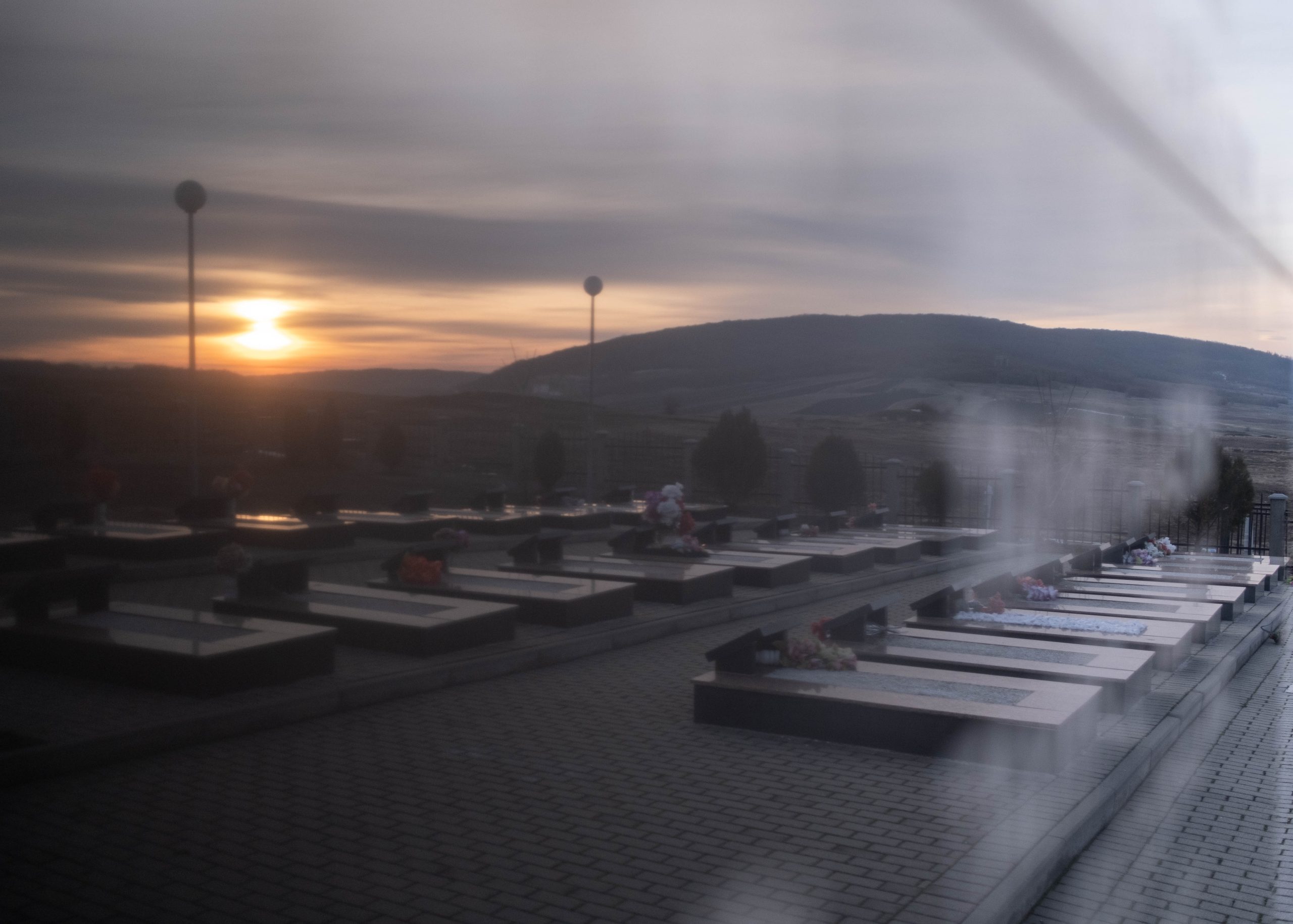
On a hilltop between the Kosovo villages of Qirez/Cirez and Likoshan/Likosane, a memorial has been erected to commemorate the ethnic Albanians who were killed in March 1999 and found after the war in a number of mass graves in the surrounding area. The remains of 96 victims have been identified.

The surrounding region, flanked by the Drenica mountains to the west, consists of the municipalities of Gllogoc/Glogovac and Skenderaj/Srbica. Prior to 1998 when the conflict in Kosovo started, both municipalities had almost entirely ethnic Albanian populations. The villages that surround the two towns are the birthplace of the Kosovo Liberation Army, which began armed operations in Drenica in 1996. They are also the scene of some of the worst abuses committed against civilians in 1999, as documented by a number of human rights organisations and later confirmed at the International Criminal Tribunal for the Former Yugoslavia, ICTY in its trial of six Yugoslav and Serbian state, army and police officials.  

According to the ICTY indictment, beginning on or about March 25, 1999, Yugoslav and Serbian forces shelled and burned the villages of Vojnike/Vocnjak, Lecine/Leocina, Klladernice/Kladernica, Turicec/Turicevac and Izbice/Izbica. Many of the houses, shops and mosques were destroyed, including the mosque in the centre of the village of Cirez/Qirez.

In groups of two or three, soldiers went from house to house in the villages, forcing their way in and, threatening residents with death, demanding money and valuables, according to the Belgrade-based Humanitarian Law Centre NGO.

Some women and children were taken away by members of Yugoslav forces and held in a barn in Cirez/Qirez. The women were subjected to sexual assault and their money and property were stolen.

The soldiers threatened to kill them all, together with their children, took away their identity papers, money and jewellery, and then two soldiers led them to a barn and locked them in. According to testimonies gathered by the Humanitarian Law Centre, soldiers several times took girls and younger women, some of whom were in advanced stages of pregnancy (between four and eight months), out of the barn and forced each of them to have intercourse and also exploited and abused them sexually in other ways.

The ICTY confirmed in its verdict that at least eight of the women were killed after being sexually assaulted, and their bodies were thrown into three wells in the village of Qirez/Cirez.

Yugoslav and Serbian forces rounded up around 4,500 ethnic Albanians from the surrounding villages, took their money and documents, and separated the men from the women. The women were mostly expelled to Albania, while large groups of men were killed. Some of the bodies were found later in the mass graves in the village, others in mass graves in Serbia. 

The killings in Qirez/Cirez formed part of the trial in The Hague of the former Yugoslav government official Nikola Sainovic and four other political and military leaders – Dragoljub Ojdanovic, Nebojsa Pavkovic, Vladimir Lazarevic and Sreten Lukic – who were found guilty by the ICTY.

The Humanitarian Law Centre also filed a criminal complaint against the former head of Serbian Army, Ljubisa Dikovic, who, during the Kosovo war, was commander of the 37th Motorised Brigade of the Yugoslav army, alleging that his units committed crimes in villages in the Drenica area. Dikovic has insisted he is not guilty.