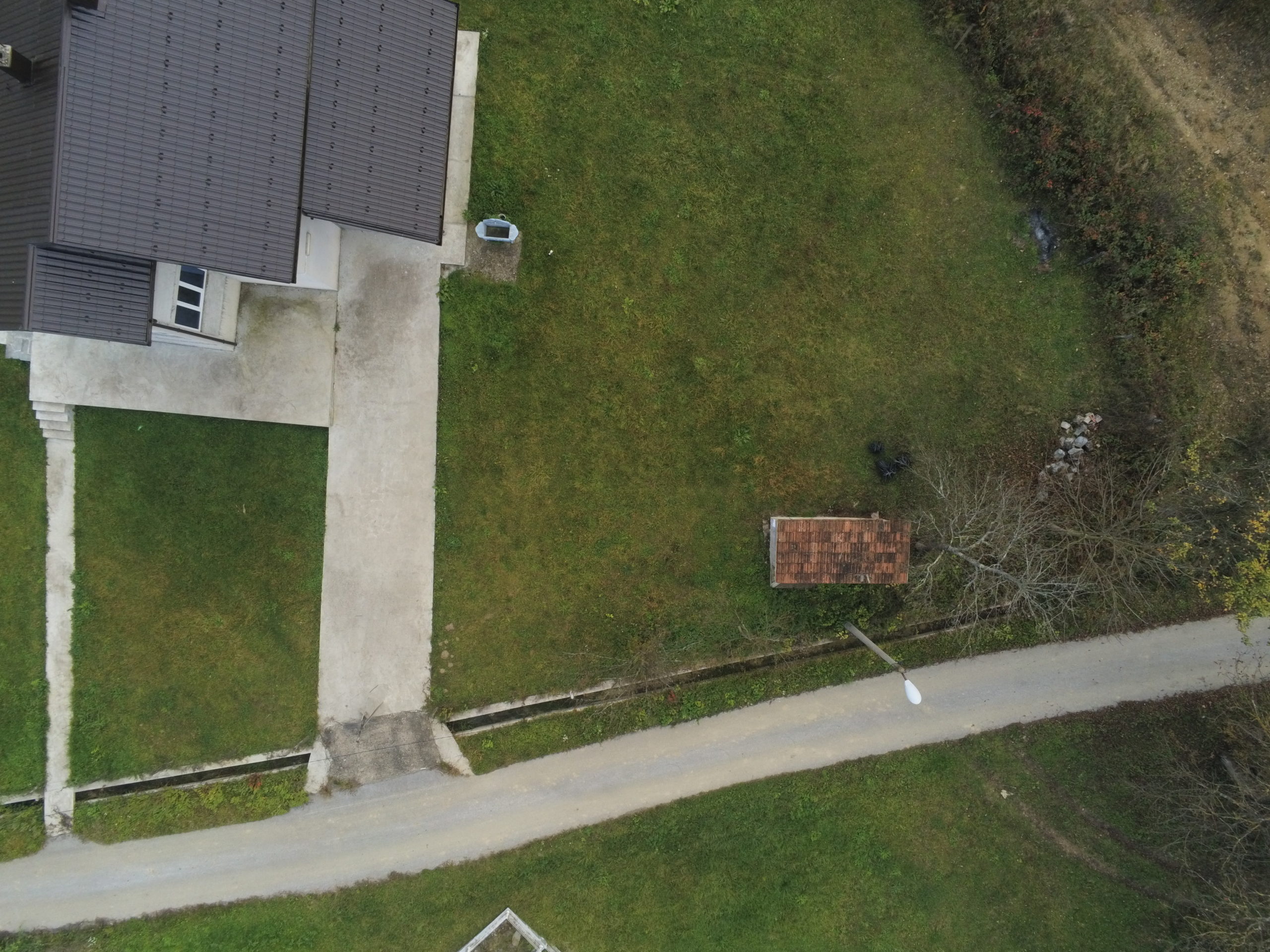
Hodzici Road 7 is a secondary mass grave (also known as Snagovo 2), located near the village of Snagovo, 17 kilometres north-west of the city of Zvornik. A total of 230 remains were exhumed from the site, while 110 were identified. There are seven known mass graves in the area dubbed Hodzici Road, all of them secondary gravesites.
The Hodzici Road 7 site, which was called Snagovo 2 by the Bosnian Federal Commission on Missing Persons, was exhumed in October and November 2005. The International Commission on Missing Persons monitored the process, and its DNA analysis showed connections between this secondary gravesite and the disturbed primary gravesite called Lazete 2 (also known as Orahovac 2). A forensics report by the International Criminal Tribunal for the Former Yugoslavia, ICTY on Srebrenica exhumations said that this means that the remains of one individual were found in at least two different graves.
The investigation also showed DNA connections between this site and Hodzici Road 1 (also known as Snagovo 4) and Hodzici Road 6 (Snagovo 1). This indicates that remains that were dug up from primary mass grave Lazete 2 were then transferred to Hodzici Road, some ten kilometres away.
The gravesite remains unmarked, next to a country road, surrounded by woods.
ICTY verdicts found that captured Bosniak men from Srebrenica were transported on July 14, 1995 to a school in the village of Orahovac. In the early afternoon, Bosnian Serb Army Zvornik Brigade personnel under the supervision of Drago Nikolic,a security officer with the Bosnian Serb Army’s Zvornik Brigade, and Milorad Trbic, Assistant Commander for Security with the Zvornik Brigade, then transported the captives to a nearby field, where personnel, including members of the 4th Battalion of the Zvornik Brigade, executed them with automatic weapons.
In related verdicts, the ICTY’s trial chamber found Radislav Krstic, the Deputy Commander and Chief of Staff of the Bosnian Serb Army’s Drina Corps, guilty of genocide against Bosniaks from Srebrenica – its first verdict establishing that the Srebrenica masacres constituted genocide. Krstic was sentenced to 46 years in prison, although the sentence was subsequently shortened to 35 years.
The ICTY also found that Ljubisa Beara, the chief of security of the Bosnian Serb Army’s Main Staff, was told to organise, coordinate and facilitate the detention, transportation, summary execution and burial of the Bosniak victims murdered at Orahovac. Beara was assisted by, among others, commander Vujadin Popovic, Chief of Security of the Bosnian Serb Army’s Drina Corps, as well as Nikolic and Trbic.
Beara, Popovic, Nikolic and Trbic were found to have supervised, facilitated and overseen the Orahovac executions, and the ICTY convicted them of genocide. Vidoje Blagojevic, commander of the Bratunac Brigade of the Bosnian Serb Army, was sentenced to 15 years in prison for aiding and abetting the murder and persecution of Bosniaks in the Srebrenica area, as well as aiding and abetting the murder of Bosniaks in Bratunac. Dragan Jokic, chief of engineering of the Zvornik Brigade of the Bosnian Serb Army, was sentenced to nine years in prison for the murders of Bosniaks in Orahovac, at the Branjevo Military Farm in Pilica and in Kozluk, and for providing engineering resources and personnel to dig mass graves for the executed victims.
According to the Federal Institute for Missing Persons in Bosnia and Herzegovina, the remains of 818 Bosniaks from Srebrenica were discovered at seven secondary gravesites in the Snagovo area.